Who should use which capability?
Map roles and tasks to chat, company knowledge, apps, reusable workflows or specialist features that are actually enabled.
Corporate AI training · Onsite & live online
Based in Bengaluru · delivering across India
Platform adoption · Workflows, knowledge and governance
Turn a ChatGPT workspace rollout into work that fits each role and can be checked, with admins, leaders and staff clear about access, sources and who is responsible.
ChatGPT Enterprise Training is a private programme for teams starting to use ChatGPT in a company workspace. It covers how staff use it day to day, good prompting and review habits, using company knowledge and connected apps, what admins need to know, rules and an adoption plan. Which features you get depends on your plan, workspace settings, the plugins or sources you switch on, role permissions and provider approval, so we confirm the final course content against your current setup. It is ChatGPT Enterprise rollout training for the people who use, manage and oversee the workspace.
Updated
Scope boundary: Technovids is an independent partner for training and adoption. Buying the workspace, licences, security approval and product support stay with your company and OpenAI, under your agreement with them.
The programme starts with the decisions that decide whether a workspace becomes useful and well run.
Map roles and tasks to chat, company knowledge, apps, reusable workflows or specialist features that are actually enabled.
Check that your plan includes the feature, your workspace settings, user approval, permissions on sources and the risk of any actions, not just search.
Set out source checks, fact checks, data handling, when to say AI was used and when to raise a problem, for each workflow.
Track good use, the quality of work, how many people really use it and review, not just the number of messages.
Training keeps what users do apart from admin and rules, so it is clear who is responsible for what.
Brief, draft, analyse and review the work of each role, within approved limits.
Best for: HR, finance, sales, marketing, operations and managers
Support learning by role, written workflows, drop-in help sessions and feedback on adoption.
Best for: Champions, enablement and learning teams
See how roles, plugins, sources, sign-in and policy choices change what users can do.
Best for: Workspace owners, administrators, IT and security
Rank workflows, name who is responsible and decide what proof you need before rolling out wider.
Best for: Functional heads and transformation leaders
Both can be hands-on, but the organisational decisions differ.
| Decision point | General workplace workshop | Enterprise workspace programme |
|---|---|---|
| Primary outcome | Better individual task and prompt habits | Coordinated workspace adoption across roles |
| Participants | Business users | Users, champions, admins and leaders |
| Knowledge and apps | Demonstrated when available | Mapped to enabled sources, permissions and workflows |
| Governance | Safe-use essentials | Roles, access, monitoring, escalation and rollout decisions |
| Output | Practised workflows | Role pathways plus an adoption backlog and operating decisions |
12 structured modules covering the full enterprise adoption journey. The curriculum is customised for your organization — not every module needs to be delivered in every engagement.
Contact Technovids for a customized agenda, duration and proposal based on team roles and training goals.
Each department has different tasks, workflows and review requirements. Training is designed around real department needs — not generic AI introductions.
| Dept | Example Tasks | ChatGPT Workflow | Human Review | Training Focus |
|---|---|---|---|---|
| HR | Policy drafts, interview frameworks, onboarding content | AI-assisted JD generation, interview question banks, policy summaries | HR partner review before sharing | Reusable HR prompts, responsible content review |
| Marketing | Campaign briefs, audience research, content repurposing | AI content drafts, brief templates, brand-aligned repurposing | Brand and compliance review before publication | Structured briefs, consistent brand voice |
| Sales | Account research, proposal drafts, meeting follow-ups | Prospect summaries, proposal templates, follow-up drafts | Sales manager review before sending | Accurate data, no fabricated facts in proposals |
| Finance | Commentary drafts, report summaries, analysis support | AI-assisted report narratives, spreadsheet analysis support | Finance manager sign-off before submission | Accuracy verification, no raw confidential data |
| Operations | SOP drafts, process documentation, issue summaries | AI-assisted process docs, checklist generation, incident summaries | Operations lead review before publishing | Process accuracy, stakeholder review |
| Leadership | Scenario exploration, briefing documents, decision preparation | AI-assisted briefing outlines, scenario analysis support | Leader review and judgment at every step | AI as thought partner, human decision primacy |
| IT | Documentation, troubleshooting guides, approved workflows | AI-assisted technical docs, issue summaries, structured FAQs | IT lead review before distribution | Approved connected workflows, access governance |
| Analytics | Data questions, reporting explanations, analysis summaries | AI-assisted narrative generation, chart interpretation support | Analyst verification before presenting | Data accuracy, appropriate caveats in output |
Avoid uploading confidential or regulated data to any AI tool without explicit organizational approval and appropriate workspace configuration.
Leadership briefing on AI opportunity, governance and organizational adoption strategy. Duration is agreed for the selected agenda.
Practical ChatGPT fundamentals for all employees — prompting, workplace tasks, responsible use and review practices.
Focused sessions for HR, marketing, finance, operations, sales and leadership with function-specific workflows and exercises.
Enable team leads and champions to guide colleagues, facilitate use-case workshops and sustain adoption.
IT and workspace administrator sessions covering app governance, access management and approved connected workflows.
Facilitated session to identify priority use cases, define workflows, assign ownership and plan governance.
Structured multi-phase engagement covering all modules, department tracks, governance and measurement.
Instructor-led sessions via video conferencing for distributed, hybrid or remote teams across India and globally.
Technovids trainer at your office — immersive, collaborative and hands-on for co-located teams.
Flexible scheduling including weekday, weekend, multi-day or phased delivery. Tailored to your team's availability.
Contact Technovids for a customised agenda, duration and proposal based on your team roles and training goals.
An illustrative 30/60/90-day plan helps connect ChatGPT Enterprise training to workplace adoption. These are planning checkpoints, not a promised implementation schedule; move forward only when the organisation has the access, ownership and evidence it needs.
Keep attendance and tool use separate from business results. A good pilot record lists the task, the starting point, the sample size, how long you measured, who reviewed it and any exceptions. Connect the learning plan to leadership decisions and the role-based corporate AI programme.
Start with the workspace your organisation has approved. This programme focuses on ChatGPT Enterprise adoption; Claude Enterprise training builds workflows in Claude. If different teams use different tools, a blended programme can share the basics and keep product practice separate. Confirm accounts, features switched on, permissions and department tasks early, rather than assuming everyone has the same tools.
The programme combines user skill with the operating clarity required for a managed rollout.
Users practise suitable tasks with a clear input, output and human review step.
People know how to check citations or source links and can spot where their permissions stop.
The company keeps what staff do apart from how the workspace is set up and approved.
Possible workflows are ranked by value, how easy they are, risk, who owns them and evidence.
The same five steps every time keep the training tied to your team’s real work, with the costs and delivery details set out in writing.
Chandan, our corporate L&D expert, asks who the training is for, what they need, any limits on delivery and what should change afterwards.
A Technovids subject expert checks your team’s starting level, tools, examples, risks and the output you want.
It confirms the agenda, format, dates, group size, what is included and excluded, and the price.
Short explanations, demos, practice and feedback, ending with a task from your team’s own work.
Your team keeps the agreed templates and work, and you receive the completion or follow-up details set out in the proposal.
The selected items depend on the rollout stage and proposal.
For each group of users: the most important tasks, the features switched on, the limits and what review is expected.
Examples you can reuse, and ways to judge the results, tied to approved business tasks.
A plain-English view of what admins set up and what users are still responsible for.
Measures for active use, task quality, review, exceptions and next decisions.
Every programme teaches your people to work within your company’s rules, with a person clearly in charge of the result.
Your team learns what they can type into an AI tool, what must stay out, and when to use an approved workspace or a made-up example.
Facts, sums, sources, tone and the effect on any decision are checked against the original material.
AI can help with a step, but a named person still checks the output and owns the decision or message.
Teams compare quality, effort, risk and take-up on one defined task, instead of claiming general time savings.
Feature availability can change and depends on the workspace plan and settings. These sources should be rechecked during scoping.
Real photos from Technovids training sessions. They show how we teach, not a promised result for your group.


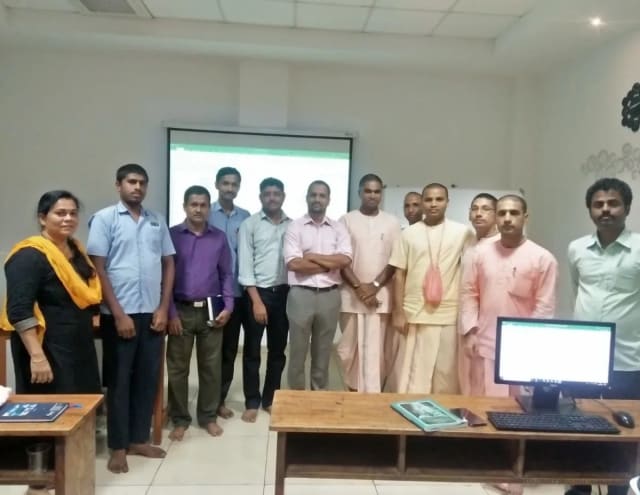
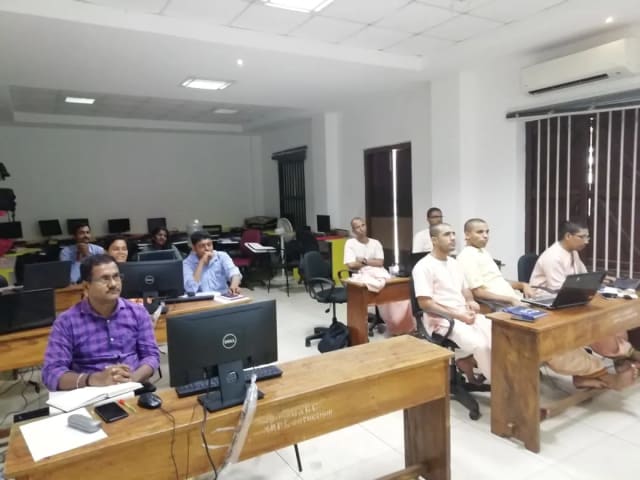


We choose the trainer once we know who is attending, how deep the subject goes and how it will be delivered.
Co-founder & Lead Instructor, Technovids Consulting
Pankaj is a co-founder and the lead instructor at Technovids Consulting. His programme work spans practical AI adoption, AI engineering, evaluation, responsible production AI, data analytics and corporate learning design, with an emphasis on hands-on exercises connected to workplace tasks.
Expertise:
AI & Machine Learning Trainer, Strategist and Consultant
Junaid is an AI and machine-learning trainer, strategist and consultant with more than 22 years of training experience. His work combines enterprise AI education, business-centred adoption, responsible AI practices and applied solution design, helping professional audiences connect AI concepts to real organisational needs.
M.E. in Computer Engineering, specialising in Artificial Intelligence · author of programming books on Python, Java and C++
Expertise:
Technical Trainer & Curriculum Architect
Pradeep is a technical trainer and curriculum architect with more than 20 years of experience across enterprise technology, cloud infrastructure and advanced AI systems. He designs practitioner-focused programmes, labs and assessments covering AI, LLM systems, Python and machine learning, translating complex technical subjects into structured learning experiences.
Bachelor of Engineering in Electrical Engineering · instructor-led, virtual and blended delivery
Expertise:
Your proposal names the trainer. Not every trainer shown here teaches every programme.
To book a trainer for your team, call +91 86183 46384 or email [email protected].
Updated
Clients who agreed to be named, feedback from people we have trained and real photos from our sessions show how Technovids works. They are not a promise of any particular result.















Hands-on training for people and teams in AI, data, cloud, productivity and workplace skills.
What people we trained found useful in their day-to-day work.
Technovids AI training was very practical and well structured. The sessions helped me understand how AI concepts can be applied in real data engineering and business workflows, instead of only learning theory. The trainer explained the topics clearly with relevant examples, which made the learning experience valuable and easy to follow.
The AI training from Technovids helped me gain a better understanding of Generative AI, prompt engineering, and practical AI use cases for software development. The course was clear, interactive, and focused on real-world applications. It gave me confidence to explore AI tools more effectively in my work.
Technovids delivered the AI training in a very practical and industry-relevant way. As a data engineer, I found the examples and hands-on discussions useful for understanding how AI can improve data workflows, automation, and decision-making. The sessions were well planned and easy to understand.
The AI training program by Technovids was insightful and professionally delivered. It covered important AI concepts in a simple and practical manner, with examples that connected well with data and analytics use cases. The sessions helped me build a stronger foundation in applying AI in real business scenarios.
Technovids conducted the AI training in a very effective and engaging manner. The sessions were practical, easy to follow, and focused on how AI can be used in real software engineering and business workflows. It was a valuable program for understanding the current direction of AI adoption in the industry.
Technovids AI training was a very useful learning experience. The course explained AI concepts in a practical way and showed how developers can use AI tools to improve productivity, problem-solving, and application development. The trainer's approach was simple, clear, and focused on industry use cases.
These answers cover what this page offers. Your written proposal sets out the terms for your own programme.
No. It is independent Technovids training designed around the organisation’s ChatGPT workspace and current OpenAI documentation.
This workspace programme works best when you know your plan and how you will roll it out. If your company has not chosen a workspace yet, a general workshop that is not tied to one product is a better first step.
Yes, when those features and sources are switched on and approved in your workspace. Training covers how people work, how to check sources and what permissions allow. It does not get around any workspace or provider controls.
OpenAI says it does not use Business, Enterprise or Edu workspace data to train its models by default. Your company should still review its contract, settings, how connected sources behave and its own policy before rollout.
A shared foundation helps, but separate sessions by role usually work better. Admins need to understand settings and rules; staff need practice with tasks, reviewing output and safe use.
The business-team course is about using AI assistants well in practice, across two tools. This page is about rolling out a managed ChatGPT workspace: company knowledge, roles, what admins need to know and rollout decisions.
Tell us who the training is for, roughly how many people, and what you want them to do better at work. The Technovids team will scope it and reply with a written proposal.
Request received
Thank you — your request has been sent to the Technovids corporate training team. If you would rather speak to someone directly, the phone and WhatsApp details are at the top and bottom of this page.
2nd Floor, Chandrodaya Complex, 19/19, 24th Main Rd, near Hanuman Temple, Agara Village, 1st Sector, HSR Layout, Bengaluru, Karnataka 560102.
Please contact us before visiting the head office. The HSR Layout address is a head office, not a walk-in public classroom.