
2 days · Practical workplace application
Professional Development Training — The Skills That Accelerate Every Career
Develop the communication, problem-framing, responsible AI-use and professional-credibility habits that make good work easier for colleagues and decision-makers to trust.
- Duration
- 2 days · 14–16 live hours
- Communication
- Write and speak for decisions
- Thinking
- Frame problems and recommendations
- Application
- Real workplace scenarios
What is the Professional Development Training course?
Professional Development Training is a 14–16-hour programme for working professionals, new hires and employees moving into broader or client-facing roles. It combines business writing and verbal clarity, structured problem-solving, responsible AI-assisted productivity and professional credibility. Participants rewrite real communications, analyse an anonymised workplace problem, test an approved AI workflow and build a practical development plan. The programme improves observable work habits; it does not promise a promotion or a fixed productivity gain. It is soft skills training for employees that also covers using AI at work responsibly.
Is this the right course for you or your team?
Who it is for
- Campus hires and early-career professionals building workplace foundations
- Technical professionals moving into client-facing or cross-functional roles
- Mid-career employees who need clearer communication and structured recommendations
- Corporate cohorts preparing people for wider responsibility
Situations it fits
- Emails and documents bury the decision or ask
- Teams jump from symptoms to solutions without framing the problem
- AI-generated work is used without enough judgement or verification
- Capable professionals struggle to communicate credibility with senior stakeholders
Prerequisites
- Participants should bring anonymised examples of typical communication or work challenges
- AI exercises use only approved tools and non-confidential information
- The programme is adapted to career stage rather than presented as one identical course for everyone
When a different course fits better
Choose a specialised programme when one capability dominates.
- Leadership Training Programmefor managers practising delegation, feedback and leadership influence
- AI for Business Professionalsfor deeper hands-on use of workplace AI tools
- Sales Development Trainingfor prospecting, outreach, calls and CRM practice
The business problems this course addresses
The programme works on visible outputs and behaviours rather than abstract “soft skills.”
| Task | The usual problem | What participants practise |
|---|---|---|
| Write for a decision | Context arrives before the conclusion, and the reader cannot see the action required. | Put the bottom line and ask first, then provide the evidence and next step. |
| Solve a workplace problem | Teams act on a symptom or preferred solution before defining the problem. | Separate facts, assumptions and causes, then structure options and a recommendation. |
| Use AI productively | A fluent first draft is treated as final work or confidential details are entered into an unapproved tool. | Use approved AI for a bounded step, then verify facts, judgement, tone and information handling. |
| Build professional credibility | Preparation, listening and stakeholder awareness are mistaken for vague confidence. | Practise specific behaviours that make communication dependable under pressure. |
What participants will be able to do
Practise the skills below through course exercises, then check the results and explain how you would apply them to your work.
Write with the bottom line first
Structure emails, briefs and recommendations so the reader sees the purpose, ask and evidence.
Speak with concise structure
Prepare and deliver an update or recommendation without filler or missing context.
Frame problems before solving
Separate symptoms, evidence, assumptions, causes and options.
Use AI with judgement
Apply an approved assistant to a bounded task and verify the output before use.
Manage stakeholder expectations
Adapt detail, timing and medium to the person and decision involved.
Create a development plan
Define observable practice habits, feedback sources and a 90-day next step.
Applied to each team’s real work
Campus and new-hire cohorts
Workplace communication, meeting habits, feedback and professional expectations.
Technical professionals
Client communication, recommendations, stakeholder context and executive summaries.
Mid-career professionals
Structured thinking, influence, visibility of work and broader responsibility.
Cross-functional teams
Shared writing standards, decision briefs, collaboration and responsible AI use.
2 days · 14–16 live hours
Detailed curriculum
The 14-hour core programme covers four modules. Up to two additional hours of role-specific practice can be included when agreed.
Module 14 hours Business communication—written and verbal
- Bottom-line-first structure
- Clear asks and useful subject lines
- Decision briefs, reports and proposals
- Meeting preparation and follow-through
Practical activityRewrite anonymised emails or briefs and deliver a concise spoken update.
Module 24 hours Critical thinking and structured problem-solving
- Problem statements and evidence
- Root-cause and issue-tree techniques
- Assumptions and cognitive bias
- Options, trade-offs and recommendations
Practical activityAnalyse a real workplace problem and present the reasoning from evidence to action.
Module 33 hours Responsible AI-assisted productivity
- Choosing a suitable AI-assisted step
- Briefing and context
- Fact, source, tone and confidentiality checks
- Documenting the human decision
Practical activityBuild and test a bounded workflow for an approved recurring task.
Module 43 hours Professional credibility and presence
- Preparation, composure and clarity
- Stakeholder awareness and managing up
- Listening and disagreement
- Development goals and feedback habits
Practical activityComplete a professional-behaviour audit and write a 90-day development plan.
Optional clinicUp to 2 hoursOptional Additional presentation or role-specific practice
- Role-specific scenario rehearsal
- Individual or small-group feedback
- Action-plan review
Practical activityRehearse one high-value workplace situation with targeted feedback.
Need the agenda built around your team’s work?
Share the roles attending and the tasks to improve. The proposal sets out the adapted agenda.
Exercises and practical outputs
Short explanations, then guided practice, review and a task from your own work.
How every module runs
Understand
Learn how to make the decision, the key terms and the standard expected.
Observe
Watch the trainer apply the method to a realistic example.
Practise
Do a short task, lab, role play or working exercise.
Review
Use evidence and feedback to improve your work and decide where to use it next.
Exercises use realistic examples with no sensitive data. What participants make in the workshop is for practice and review, and anything they keep is their own working material.
How the course is tailored and delivered
We shape private training around your roles, starting level, systems, policies and the situations your people must handle afterwards.
From first conversation to evaluation
Agree the job outcome
Agree what your people should be able to explain, do or produce after the programme.
Check the starting point
Look at experience, tools, terms and access, so the course does not start at the wrong level.
Pick realistic practice
Choose useful scenarios and data without exposing anything confidential or restricted.
Agree how completion is shown
Confirm the practical output, how feedback is given and the follow-up expected.
Delivery formats
Private corporate cohort
Best for: One company building the same skills or platform know-how across a team
Live online or at your office. The proposal confirms the scope, exercises, prerequisites, group size and support.
Modular programme
Best for: Teams that need to fit learning around their work
The course can be split into shorter sessions, with practice in between. The schedule and handover are agreed in writing before we start.
Delivery modes
Live online
Trainer-led sessions with demos, group practice, review and shared documents.
Onsite
Private training at your office, with prerequisites and room or lab needs agreed beforehand.
Practice, feedback and working sessions—not a slide marathon
Technovids training sessions with different groups. The photos do not name a client, course or result.

Photo 1 of 10: Hands-on session 
Photo 2 of 10: Group photo 
Photo 3 of 10: Hands-on session 
Photo 4 of 10: Group photo 
Photo 5 of 10: Classroom session 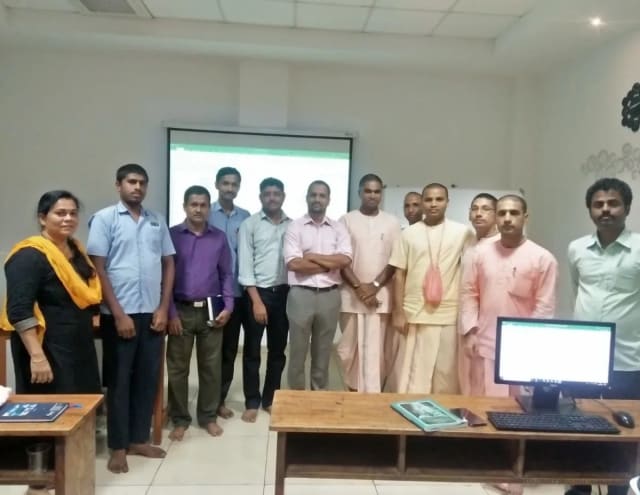
Photo 6 of 10: Group photo 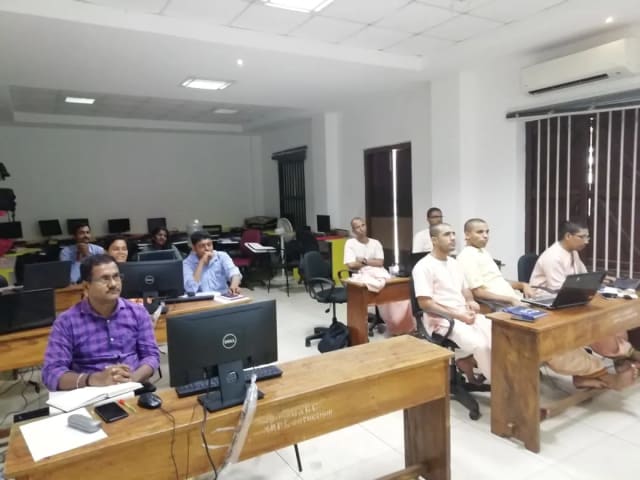
Photo 7 of 10: Computer-lab session 
Photo 8 of 10: Group photo 
Photo 9 of 10: Classroom session 
Photo 10 of 10: Group photo
For L&D and procurement teams
The published course parameters on one page. Final scope, dates and fees are confirmed in the written proposal.
Discuss your team’s requirements| Course | Professional Development Training |
|---|---|
| Duration | 14-hour core; up to 2 additional practice hours when agreed |
| Audience | New hires, working professionals, technical specialists and cross-functional teams |
| Recommended group | 15–30 participants with breakouts for practice |
| AI boundary | Only approved tools and non-confidential practice information |
| Outputs | Rewritten communication, structured problem analysis, tested workflow and 90-day plan |
Who may deliver this programme
We choose a trainer whose subject knowledge and teaching experience suit your group and the agreed scope.
Pankaj Rana
Co-founder & Lead Instructor, Technovids Consulting
Pankaj is a co-founder and the lead instructor at Technovids Consulting. His programme work spans practical AI adoption, AI engineering, evaluation, responsible production AI, data analytics and corporate learning design, with an emphasis on hands-on exercises connected to workplace tasks.
Expertise:
- Practical AI adoption
- Prompting and evaluation
- Responsible AI
- Corporate learning design
Junaid Khateeb
AI & Machine Learning Trainer, Strategist and Consultant
Junaid is an AI and machine-learning trainer, strategist and consultant with more than 22 years of training experience. His work combines enterprise AI education, business-centred adoption, responsible AI practices and applied solution design, helping professional audiences connect AI concepts to real organisational needs.
M.E. in Computer Engineering, specialising in Artificial Intelligence · author of programming books on Python, Java and C++
Expertise:
- Enterprise AI and ML training
- AI strategy and adoption
- Responsible AI
- Applied AI solution design
Pradeep Varadarajan
Technical Trainer & Curriculum Architect
Pradeep is a technical trainer and curriculum architect with more than 20 years of experience across enterprise technology, cloud infrastructure and advanced AI systems. He designs practitioner-focused programmes, labs and assessments covering AI, LLM systems, Python and machine learning, translating complex technical subjects into structured learning experiences.
Bachelor of Engineering in Electrical Engineering · instructor-led, virtual and blended delivery
Expertise:
- AI and LLM systems
- Curriculum architecture
- Python and machine learning
- Hands-on lab design
The trainer for your sessions is confirmed with the dates or in the written proposal.
To book a trainer for your team, call +91 86183 46384 or email [email protected].
Updated
Organisations we have trained, and participant perspectives
Feedback shared with permission, and clients who agreed to be named, show how we deliver. They are not a promise of a certification, promotion, sales or any other result.
Organisations we have delivered training for



















Hands-on training for people and teams in AI, data, cloud, productivity and workplace skills.
Participant experiences across workplace roles
What people we trained found useful in their day-to-day work.
- Gauraw DeshmukhData Engineer · Capgemini
Technovids AI training was very practical and well structured. The sessions helped me understand how AI concepts can be applied in real data engineering and business workflows, instead of only learning theory. The trainer explained the topics clearly with relevant examples, which made the learning experience valuable and easy to follow.
- PriyanshaSoftware Developer
The AI training from Technovids helped me gain a better understanding of Generative AI, prompt engineering, and practical AI use cases for software development. The course was clear, interactive, and focused on real-world applications. It gave me confidence to explore AI tools more effectively in my work.
- Sidda RajuData Engineer
Technovids delivered the AI training in a very practical and industry-relevant way. As a data engineer, I found the examples and hands-on discussions useful for understanding how AI can improve data workflows, automation, and decision-making. The sessions were well planned and easy to understand.
- Akshat KabraData Engineer
The AI training program by Technovids was insightful and professionally delivered. It covered important AI concepts in a simple and practical manner, with examples that connected well with data and analytics use cases. The sessions helped me build a stronger foundation in applying AI in real business scenarios.
- MangeshSoftware Engineer · Siemens
Technovids conducted the AI training in a very effective and engaging manner. The sessions were practical, easy to follow, and focused on how AI can be used in real software engineering and business workflows. It was a valuable program for understanding the current direction of AI adoption in the industry.
- ReshuSoftware Developer
Technovids AI training was a very useful learning experience. The course explained AI concepts in a practical way and showed how developers can use AI tools to improve productivity, problem-solving, and application development. The trainer's approach was simple, clear, and focused on industry use cases.
Common questions before planning this course
Answers about the course as published. Your written proposal records any changes we agree, how it is delivered and the price.
Can Professional Development Training be customised for our organisation?
Yes. Private programmes can reflect your roles, starting level, approved systems, industry and the work situations we agree. The proposal records the final agenda and outputs.
Can this be delivered onsite or live online?
Yes. Private groups can choose either. Dates, location, session plan, group size and any technical or room needs are confirmed in writing.
Is a Technovids completion certificate included?
Yes, for people who meet the completion requirements. Each Technovids certificate has a unique ID you can check on the Technovids website. It is not a cloud-vendor or professional-body certification.
Is this a generic soft-skills workshop?
No. The course is organised around observable work: a clearer written communication, a structured problem analysis, a reviewed AI-assisted workflow and a development plan. Private cohorts use role-relevant scenarios.
Can this be used for campus-hire induction?
Yes. The communication, meeting, problem-framing and professional-expectation examples can be adapted for new hires, while maintaining practice groups small enough for useful feedback.
Does the AI module promise a productivity improvement?
No fixed time saving is promised. Participants test one bounded workflow and consider the time spent briefing, checking and correcting the output before deciding whether it is useful.
What does executive presence mean in this course?
It is treated as a set of learnable behaviours—preparation, concise communication, listening, composure, stakeholder awareness and follow-through—not as personality, appearance or imitation of a single leadership style.
Turn a training requirement into a clear course proposal
Share the audience, team size, delivery preference and the work you want to improve. Technovids will scope the programme and confirm the details in a written proposal.
Request received
Thank you — your request has been sent to the Technovids corporate training team. If you would rather speak to someone directly, the phone and WhatsApp details are at the top and bottom of this page.